
Agriculture Spraying
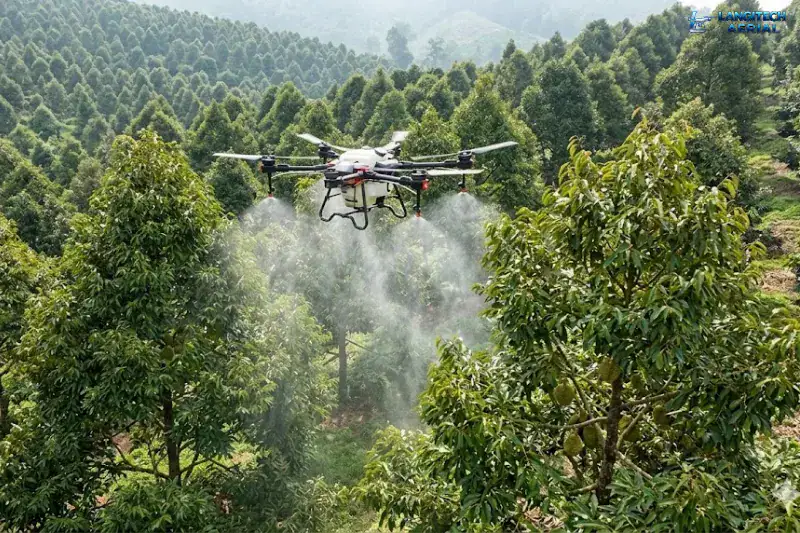
Durian is one of Malaysia’s most valuable agricultural exports. However, anyone managing an estate knows it is incredibly hard to protect. The trees are massive. Furthermore, the canopies are extremely thick. Meanwhile, the terrain is usually hilly. Because of this, the window to stop a disease outbreak is brutally narrow.
Catching a Phytophthora outbreak late is devastating. You will lose this season’s yield. Worse, you might even lose trees that took six years to reach maturity.
For decades, we have relied on manual labor. But let’s be honest about the limitations. Workers carrying heavy backpack knapsacks struggle to reach the upper canopy. Unfortunately, that is exactly where most fungal and insect problems start. Moreover, the coverage remains inconsistent. It depends entirely on how tired the worker feels. Plus, carrying heavy packs up the steep slopes of Raub or Kelantan creates a massive safety hazard.
If you look into commercial drone spraying durian Malaysia operations, the results are clear. Forward-thinking estates already integrated drones. For instance, Top Fruits Plantations runs a massive 700-acre operation in Batu Pahat. They reported a 40% yield increase and a 30% workforce reduction.
Therefore, here is exactly why the technology is taking over the durian sector.
Why Durian is the Perfect Fit for Drone Spraying
Durian estates present three massive logistical headaches. Fortunately, drones solve them almost instantly:
1. Tree Height: Mature Musang King and D24 trees easily hit 10 to 20 meters tall. Consequently, getting a manual spray to penetrate the top third of that canopy is nearly impossible. Drones apply the chemicals from above. They use the powerful downdraft of their propellers to push the treatment deep into the foliage. 2. Brutal Terrain: Farmers grow a huge percentage of Malaysian durian on steep, sloped terrain. Drones completely bypass the ground. As a result, they keep workers safe and slash the time it takes to cover a hilly block. 3. The Speed of Outbreaks: Phytophthora infections spread like wildfire. You only have days, not weeks, to intervene effectively. For example, a drone crew can mobilize and treat a 100-hectare estate before a manual crew even covers one hill.
The 3 Best Applications for Durian Drones
1. Fungal Disease Control
Phytophthora palmivora (fruit and stem rot) and Phytophthora cinnamomi (root rot) are public enemy number one. Drones are highly effective for preventive fungicide applications during flowering. They also excel at rapid-response sprays when symptoms first appear. The trick: Specifically, the operator needs the right nozzle setup and flight altitude. This ensures the fungicide penetrates the canopy and actually hits the fruit-and-stem junctions.
2. Insect Pest Management
First, stink bugs (Tessaratoma papillosa) are the most commercially damaging insect pest for local durian. They cause massive fruit drop. Therefore, when an infestation hits, you need area-wide chemical intervention immediately. Drones can blanket an entire estate during the critical intervention window before the bugs destroy the crop.
3. Foliar Fertilizer Application
Foliar nutrition programs are perfectly suited for drones. Because foliar uptake happens primarily through leaf surface absorption, the drone delivers incredible results. Specifically, the consistent, ultra-fine mist that a drone generates provides much better coverage than a worker aiming a hose up from the ground.
What to Check Before You Hire a Drone Crew
Spraying durian is highly technical. Therefore, before you sign a contract with an agricultural drone operator, demand answers to these questions:
- What is your canopy penetration strategy? Do not accept vague promises. Instead, ask what specific flight altitude and nozzle configurations they use for 15-meter durian trees.
- Are your chemicals legal for drones? Confirm that your specific chemicals work with Ultra-Low Volume (ULV) drone application. Also, verify they comply with the Pesticides Act 1974.
- Do you have CAAM Certification? Every pilot on your estate must hold an RCoC-B or RCoC-AL certification. Furthermore, the operator must file specific ATF permits for your exact estate blocks.
- How fast can you respond to an outbreak? If you spot Phytophthora, you need them on-site in 48 to 72 hours, not two weeks. Ensure you write rapid response clauses into your service agreement.
The Honest Limitations
At LangiTech Aerial, we don’t pretend drones are magic. For example, they do not replace every single aspect of ground-level care:
- Root and Trunk Treatments: Drones cannot do systemic root drenches for Phytophthora root disease. They also cannot do trunk injections for stem borers. Thus, you still need a ground crew for that.
- Tiny Estates: Similarly, if your plot is under 10 acres, the mobilization cost of a commercial drone crew usually won’t make economic sense.
The strongest case for a drone spraying contract is a medium-to-large estate (50 acres and above) dealing with hilly terrain, labor shortages, and strict disease management schedules.
Wondering if your estate is the right fit for drone spraying? Send us your location in Peninsular Malaysia, your total acreage, and your current crop challenges. We will give you a straight, no-nonsense assessment of what a drone program will cost and what it will save you.
Need Help Planning a Compliant Drone Project in Malaysia?
Speak with our team about commercial drone operations, compliance requirements, and the right aerial solution for your project.