
CAAM & Regulations
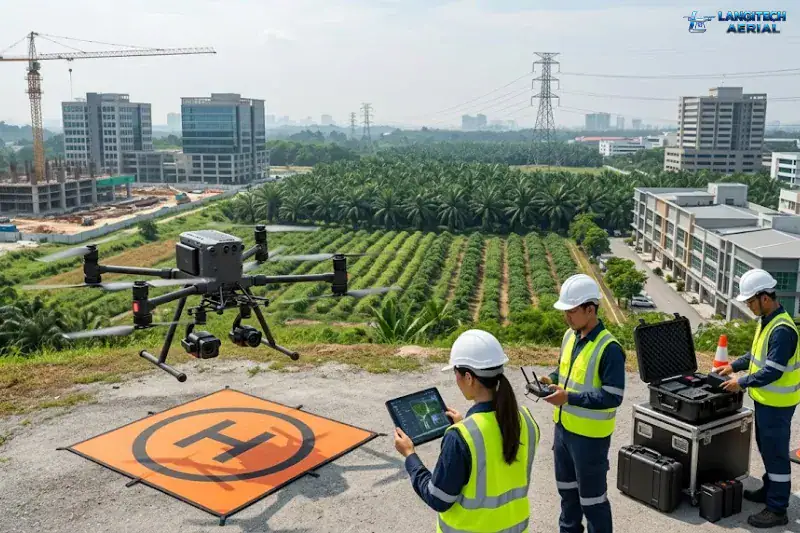
Malaysia’s commercial drone sector has grown steadily for years. However, 2026 feels entirely different. The commercial drone industry Malaysia 2026 landscape no longer looks like an experimental technology category. Instead, it has transformed into an established, professional service sector. Furthermore, clearer regulations and smarter buyers are driving this massive shift.
Therefore, this guide offers a frank, boots-on-the-ground look at where the industry stands today. We will cover exactly which sectors drive real adoption, where the technology hits its limits, and what you must know before hiring an operator.
The Biggest Sectors Driving the Commercial Drone Industry Malaysia
1. Agriculture: The Heavyweight Champion
Agriculture represents the highest-volume application for commercial drones in Malaysia. Currently, our oil palm, paddy, and plantation sectors lead Southeast Asia in rapid adoption. Estate managers face brutal labor shortages and skyrocketing input costs. Consequently, manual knapsack spraying simply does not make economic sense anymore.
Today, adoption goes way beyond early experiments. For example, large plantation groups now sign massive multi-year service contracts. Furthermore, FELDA divisions actively evaluate systematic drone programs. Meanwhile, MADA and KADA paddy schemes run multiple drone operators concurrently during peak seasons.
The regulations are finally catching up to this massive demand. Last year, CAAM introduced specific provisions for agricultural operations. Soon, the proposed RCoC-AL (Agriculture Light) certification will create a dedicated, specialized licensing track just for farming pilots.
2. Construction & Development: The Hidden Giant
People seriously underestimate drone adoption in property development. Years ago, developers only wanted pretty aerial photos for marketing brochures. Now, they integrate drone survey data directly into their daily project management workflows.
Developers with multiple active sites drive this growth. A weekly drone survey program gives the head office a verifiable, consistent view of every single project. Ground teams simply cannot provide this level of frequent, objective data.
Specifically, earthworks volume tracking is exploding. Developers and contractors constantly argue over cut-and-fill volumes. However, an independent drone survey documents exact volumes at every billing period. As a result, expensive disputes vanish. In fact, several Klang Valley developers now legally mandate drone monitoring in all new earthworks contracts.
3. Energy & Utilities: Solar and Power Grids
Malaysia’s [National Energy Transition Roadmap] has accelerated massive solar farm construction. Consequently, these Large-Scale Solar (LSS) projects require serious ongoing maintenance. Thermal drone inspection is now the absolute standard method for finding hidden solar panel faults.
Additionally, [Tenaga Nasional Berhad (TNB)] uses drones extensively to inspect transmission infrastructure. Now, independent power producers copy this exact model for their own portfolios. The math is incredibly simple. Inspecting 20 kilometers of transmission lines with a drone costs a fraction of a helicopter flight.
4. High-Rise Building Services
The building services sector is newer, but it is growing rapidly. [Department of Occupational Safety and Health (DOSH)] statistics repeatedly highlight falls from height as a leading cause of workplace deaths. Therefore, drone-based facade cleaning and structural inspection offer a massive safety advantage.
Currently, high-end commercial buildings and hotels lead this adoption. They love drones because traditional scaffolding is expensive and highly disruptive to business. Furthermore, residential Joint Management Bodies (JMBs) are slowly catching on as they look for ways to protect their sinking funds.
What Smart Buyers Must Know Before Hiring
You must understand one critical fact about the current market. Operator quality varies wildly, and a high price never guarantees good work. Right now, the market lacks a strict quality assurance framework beyond basic CAAM pilot licenses. Consequently, a legally certified pilot might offer agricultural spraying despite having zero actual farming experience.
Therefore, specialization matters infinitely more than company size. An operator who completed fifty construction surveys will crush a competitor who only filmed weddings. Thus, you must demand proof of specific sector experience before you sign a contract.
As the market matures through 2026 and 2027, expect to see operators finally picking specific lanes rather than trying to do everything.
What is Next: The UAS-TMS Rollout
The upcoming UAS-TMS (UAS Traffic Management System) rollout will permanently change the industry. CAAM will soon require all commercial drones to broadcast real-time tracking data during flights.
For legitimate operators, this transition is easy. It just requires a few equipment upgrades and basic registration. However, this system will utterly destroy the “fly-by-night” operators working without permits. Ultimately, this creates a much safer, more reliable market for you as a buyer.
Need a reliable, fully certified operator for your next big project? The industry is changing fast, and you need a team that actually understands your specific sector. Reach out to the [LangiTech Aerial] team today, and we will deliver exactly what your site needs.
Need Help Planning a Compliant Drone Project in Malaysia?
Speak with our team about commercial drone operations, compliance requirements, and the right aerial solution for your project.